40% Is Too Much Life to Spend on Autopilot
There is a point in midlife when the question starts to change.
At first, they may sound like:
Why am I not sleeping the same way?
Why does my energy feel different?
Why does my body feel less predictable?
Why do I feel like myself one week and completely off the next?
Those are important questions. They are often the first clues that something is shifting.
But eventually, another question begins to rise underneath all of them:
How do I want to live from here?
Because perimenopause, menopause, and postmenopause are not a short pause in the middle of life.
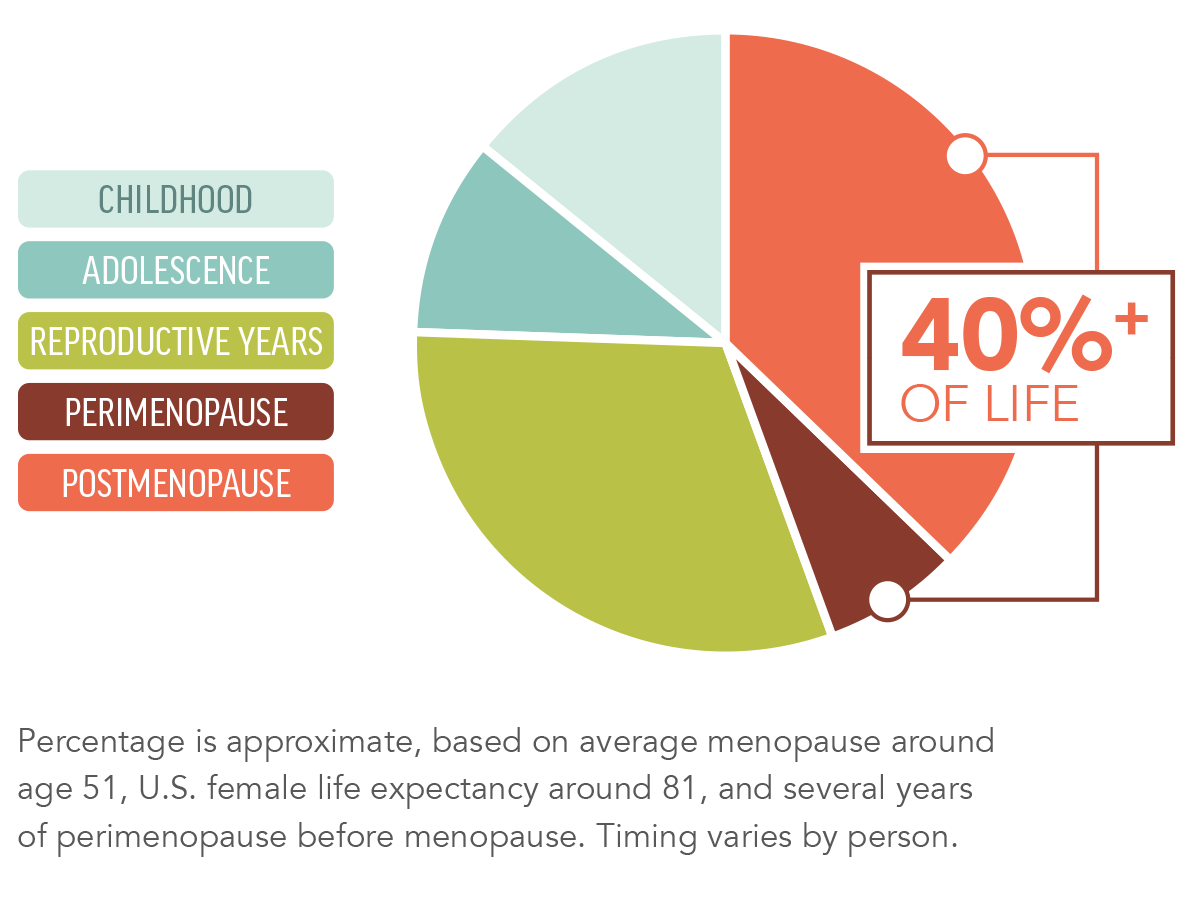
For many women, this season may represent 40% or more of life.
That is not a brief transition. That is a major chapter.
And 40% is too much life to spend on autopilot.
Menopause is not just something to get through
It is easy to think of menopause as a stretch of symptoms.
A few rough years. A hormonal disruption you are supposed to push through until things settle down.
But the bigger picture is much longer than many women realize. Perimenopause is the transition leading up to menopause. Menopause is reached after 12 consecutive months without a period. Postmenopause is everything after.
If you are still trying to sort out the difference between these stages, you may want to start with Perimenopause vs. Menopause: What’s the Difference?
Once you understand the timeline, the reframe becomes hard to ignore.
This is not just about managing symptoms. It is about deciding how you want to support your body and your life for the decades ahead.
What does autopilot look like in midlife?
Autopilot does not always look dramatic. Sometimes it looks like brushing off symptoms because you are busy.
It looks like assuming exhaustion is just part of getting older. It looks like slowly doing less because your body feels less capable. It looks like saying, “This is probably just how it is now.”
And sometimes, changes do come with this stage of life.
But that does not mean the only option is resignation.
There is a difference between accepting that your body is changing and assuming there is nothing you can do.
Acceptance says:
My body is different now, and I am willing to understand what it needs.
Resignation says:
This is just what happens, so there is no point paying attention.
Those are not the same thing.
The next 40% deserves intention
Midlife changes are real.
Hormones shift. Sleep can change. Energy can change. Cycles may become less predictable. Body composition, strength, recovery, mood, and mental clarity may all feel different than they did before.
If you are trying to make sense of those early changes, Menopause Symptoms: What to Notice First in Midlife may help you begin connecting the dots.
But the goal is not to notice what is changing so you can criticize yourself. The goal is to notice what is changing so you can support yourself.
This is the time to ask better questions:
What is my body asking for now?
What kind of strength do I need for the life I want?
What habits help me feel more steady?
What am I tolerating that needs attention?
Where do I need more support?
These questions matter because the choices we make in midlife can shape how we feel, move, age, and participate in our own lives.
Start by noticing
You do not have to overhaul your whole life in one week. You do not have to solve every symptom at once.
A good first step is simply to notice.
Notice what feels different.
Notice what keeps coming up.
Notice what affects your sleep, energy, mood, cravings, focus, cycle, strength, and recovery.
Notice what helps you feel more steady.
Notice what drains you.
That kind of awareness is not obsessive. It is useful.
If your symptoms have been feeling random, you may also like When Midlife Symptoms Feel Random, Look for the Pattern.
Because patterns often give you more information than isolated symptoms.
And once you start seeing the pattern, you can stop moving through this stage on autopilot.
These years are not a waiting room
Menopause is not the end of becoming. It is not a slow fade. It is not a sign that the best years are automatically behind you.
This is a long and important part of life that deserves intention.
So maybe the question is not only:
What is happening to me?
Maybe the better question is:
How do I want to live the next 40% of my life?
If you want a simple place to begin, start with the free Menopause Symptom Trail Map. It will help you start noticing common symptom patterns and make more sense of what may be shifting in midlife.
Download the free Menopause Symptom Trail Map
When you are ready for deeper guidance
If this post makes you realize that 40% of life is too much time to spend on autopilot, that is exactly why I created The Menopause Trail Guide.
The book goes beyond a simple symptom list. It helps you understand what may be changing in your body, learn what to pay attention to, and build your own map for moving forward with more clarity and confidence.
It is visual, practical, and designed to help you feel less overwhelmed by menopause and more grounded in how you want to live the years ahead.
If you are ready for direction on how to set yourself up for decades of living stronger, this guide was made for you.